
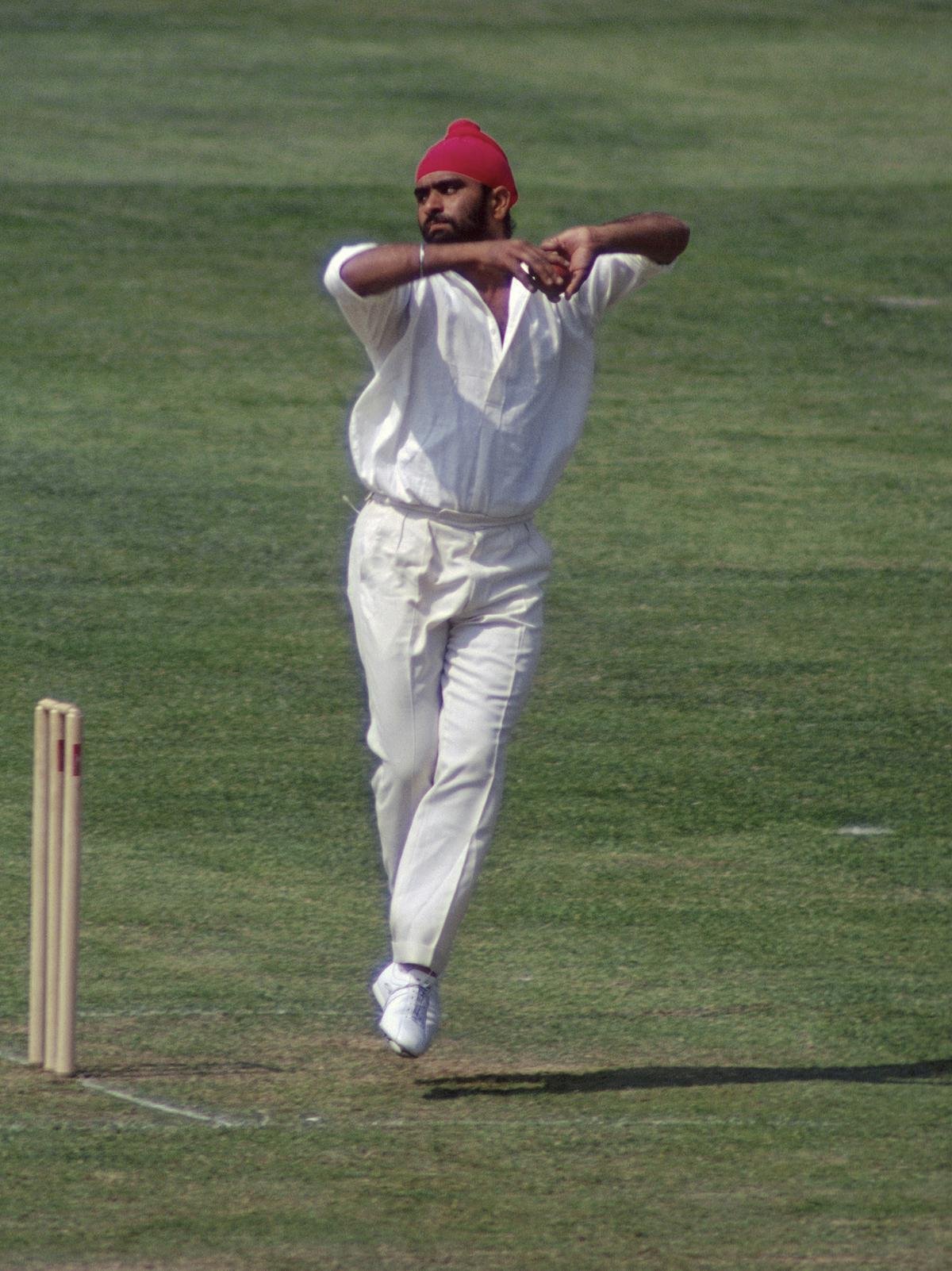
https://www.thehindu.com/sport/spin-king-bedi-gets-an-emotional-final-send-off/article67455431.ece Crestfallen former cricketers recall how the legendary left-armer, who passed away on Monday after prolonged illness, shaped up their careers and remained a guiding light Poetry in motion: With a classical and easy action, Bedi confounded the best of batters the world over and spelt their doom. | Photo Credit: Getty Images The mortal remains of Bishan Singh Bedi were consigned to flames at the Lodi Road crematorium here on Tuesday with a sea of former and current cricketers in attendance to pay their tributes. Many broke down when Bedi’s body was brought from his home ‘Cricket Abode’ in South Delhi. Wife Anju, son Angad, daughter Neha, daughter-in-law Neha Dhupia, son-in-law Gautam, cricketers Kapil Dev, Madan Lal, Kirti Azad, Gursharan Singh and Kartik Murali were the pallbearers. Bedi, 77, passed away on Monday following prolonged illness. Madan Lal was heartbroken. “He was my Ustad. He taught me to dream big and work hard to make them come true. He was instrumental in giving shape to career by advising me to shift to Delhi from Amritsar. A great human being.” Apart from hockey greats Ajitpal Singh and Gurbax Singh, a galaxy of cricketers descended on the Capital to be part of Bedi’s final journey. Zaheer Khan, Ashish Nehra, Rahul Sanghvi flew down from Mumbai, along with anchor Gaurav Kapur. “I would meet him with Angad and it was cricket education always,” remarked Zaheer. “Bishan Paaji was an epitome of cricket culture. He was strict and he was also warm-hearted, giving an ear to your problem. There will not be another like him,” said Nehra. “He was the coach when I first became India captain,” said Mohammad Azharuddin. “He was also responsible for me making my debut in the 1984 series (against England). His cricket wisdom was unmatched.” Virender Sehwag presented a poignant picture. “He was a guiding force for all of us. My coach when I was made captain of the Delhi team. There was so much to learn from him,” said Sehwag Maninder Singh was crestfallen. “A part of me has gone with him. I looked up to him for support and he never disappointed. In fact, Bedi paaji was the reason for me bowling left-arm spin.” For Ajay Jadeja, it was an introspection that took him back in time when Bedi would interact with him to drive home the importance of training and discipline. “His stories of fitness are legendary and I have experienced them first-hand,” noted Jadeja, who took time off from his duties as a mentor with the Afghanistan team in the ongoing World Cup. An emotional Surender Khanna, who had a long association with Bedi as a Delhi team member and a colleague at the Steel Authority of India Limited (SAIL), said, “Truly the end of an era. Salute to my mentor. May you rest in peace and power. Bishan paaji was one of the greatest to have played the game. Blessed and honoured to have played under and with you. He shaped North India’s cricket to be what it is today.” Some others who paid their tributes were film star Sharmila Tagore, former Test cricketers Sarandeep Singh and Chetan Sharma, former Haryana and North Zone off-spinner Sarkar Talwar, First Class cricketers Akash Lal, Arun Khurana, Pradeep Jain, Vinay Dutt, Kunaal Lal, Sandeep Joshi, Atul Mohindra, Parvinder Awna, Gautam Wadehra, Tilak Raj and Sukhvinder Singh.
Opinion | India’s Rise as a Sporting Power and Why It’s the Perfect Time to Host the IOC Session
https://www.news18.com/opinion/opinion-indias-rise-as-a-sporting-power-and-why-its-the-perfect-time-to-host-the-ioc-session-8615372.html In the decade-and-a-half since Abhinav Bindra became the first Indian to win an individual Gold medal at the Olympics, India has been making rapid progress towards becoming a sporting nation. The country’s sports ecosystem has geared itself up to ensure that Indians are no longer mere participants but turn up as competitors at global events To those giving it a cursory glance, the three-day International Olympic Committee (IOC) Session at the Jio World Centre in Mumbai would appear to be just another conclave of world sports leaders. The reality is that it is a landmark opportunity for Indian sport to benefit from immense knowledge-sharing on the sidelines. Of course, the IOC Session will become even more special for India as it is believed that cricket – a game that Indians follow with intense passion – would get the nod for inclusion in the Olympic Games programme for the 2028 Los Angeles Games. From a broader perspective, the session could not have come at a more perfect time for India. In the decade-and-a-half since Abhinav Bindra became the first Indian to win an individual Gold medal at the Olympics, India has been making rapid progress towards becoming a sporting nation. The country’s sports ecosystem has geared itself up to ensure that Indians are no longer mere participants but turn up as competitors at global events. It is an exciting time for Indian sport; a top 20 finish is possible in the 2024 Paris Games with five Gold medals. Doubling that tally of Gold can pitchfork India to a top 10 slot on the medal tally in 2028. Given the energy and the sharp focus on what it takes to get that, it is no longer a utopian thought to see India emerge as a sporting power. The attitudinal change among athletes was best reflected in the Olympic Games in Tokyo and further reinforced in the Asian Games which concluded recently in Hangzhou with India crossing 100 medals for the first time. The great awareness of what it takes to be counted among the medal probables and the immense self-belief that the athletes bring to the table are a joy to behold. These are the qualities that saw three Indians finish among the top six in the men’s Javelin Throw final at the World Athletics Championships in Budapest in August. It is such desire and belief that drives a Jyothi Yarraji, a product of the Reliance Foundation, to fight to be reinstated in the Asian Games 100m Hurdles final after she was wrongly disqualified. These are attributes that make HS Prannoy back up his Thomas Cup heroics with a rare Asian Games medal for an Indian badminton player – and Satwiksairaj Rankireddy and Chirag Shetty rise as World No. 1 pair in men’s doubles. These are the traits that mark Harmanpreet Singh and the Indian men’s hockey team’s consistent performances, including the Asian Games Gold. The range of sport in which Indians have shone at the international level is heart-warming, to say the least. From athletics to badminton, from boxing to wrestling, from archery to shooting, young Indians have begun to make waves and placed India among the nations to watch out for at international competitions. With the Union government backing the growth of sports as a soft power, Indian sport has only gained from strength to strength. And, with a number of corporates supporting the movement in their own way, the collective will to succeed has become a powerful force that propels Indian sport in the best possible direction. The pace increased in the wake of a disappointing show in the 2016 Olympics in Rio. Prime Minister Narendra Modi appointed an Olympic Task Force and a number of suggestions were embraced, and action taken on diverse fronts to make Indian sport more athlete-centric. On their part, sports fans have begun to appreciate the athletes’ joy of effort on the international stage. Besides, sports administrators have realised they will be held accountable if their disciplines are not making progress on the global front. They have moved to ensure that they plan the best training and competition progamme for their athletes. Many national sports federations now encourage coaches to go beyond NIS diplomas and acquire international credentials. One of the significant contributions to the growth trajectory has been a better awareness of the need to provide the right scientific back-up to the athletes. The infusion of a number of strength and conditioning experts, trainers and physiotherapists, mind trainers and recovery experts in the support system has opened up new vistas for Indian sport. The IOC Session offers the Indian Olympic Association and the national sports federations opportunities to engage with the IOC leadership and with the members of the IOC, many of whom drive international sports federations. This can be a great learning experience to usher in better governance and administration within India. It is not as if the focus has been only on elite athletes. The Olympic Value Education Programme is gaining root in India with the Abhinav Bindra Foundation leading the way. With the Reliance Foundation signing an agreement with IOC, the core values of friendship, respect and excellence will find greater resonance among youngsters in India. With such wholesome and conscious evolution, it is only a matter of time that India starts asserting its presence more tellingly. And there can be no doubt that the flow of information and the knowledge-sharing during the three days of the IOC Session will act as the catalyst that encourages a more conducive environment for India’s perceptible growth in the global sports landscape.
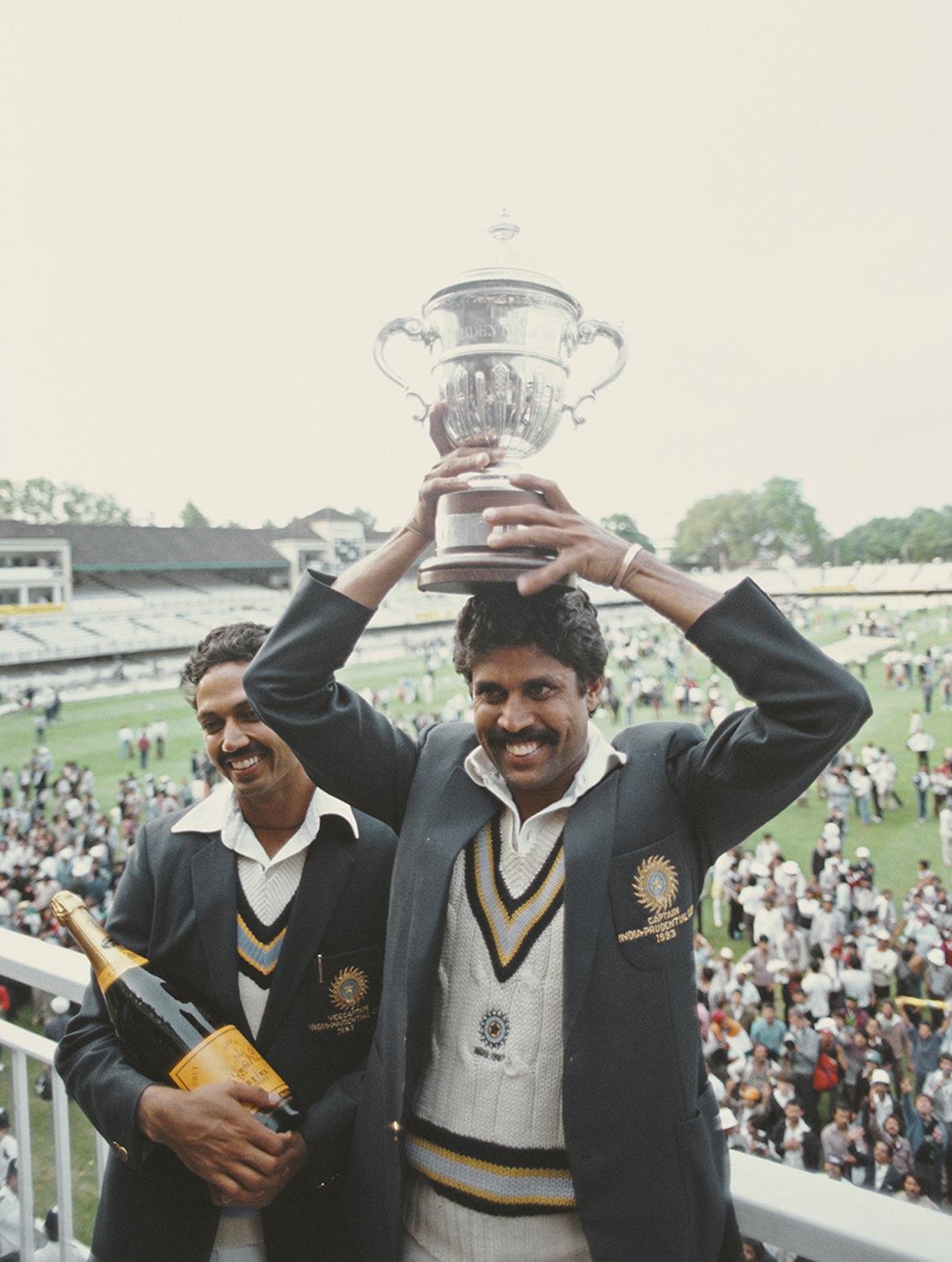
India’s 1983 World Cup victory…40 years on
https://www.thehindu.com/sport/cricket/india-1983-world-cup-victory-40-years/article67007657.ece On the 40th anniversary of the 1983 World Cup win, The Hindu revisits the defining moment in Indian cricket history On the 40th anniversary of the Indian men’s cricket team winning their maiden World Cup title, here is a look at the The Hindu’s coverage of that memorable day. From the match report from Lord’s to manager Man Singh’s tales, The Hindu revisits the defining moment in Indian cricket history.
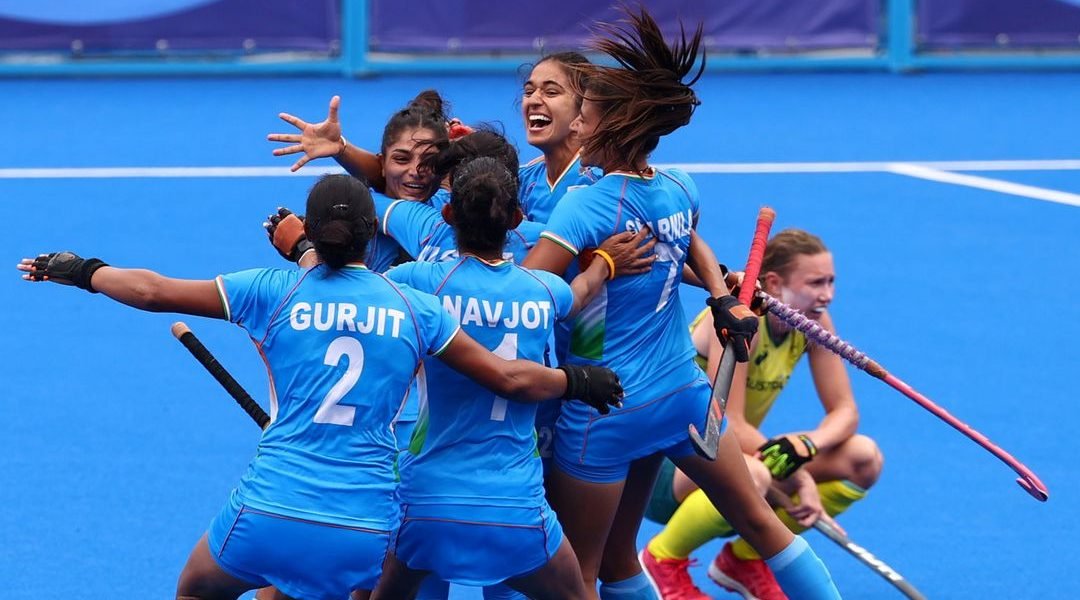
With Love From Tokyo
https://thewire.in/sport/tokyo-olympics-womens-hockey-team-india The women of Indian hockey have begun scripting a new and inspirational narrative for the sport at the Olympics, with skills forged in the fire of intense personal hardships. The heart-warming performance of the Indian women’s and men’s hockey teams in the ongoing Tokyo 2020 Olympics has suddenly made the country sit up and take note of the sport. Promos on television inviting people to “become the players’ fans” are a dime a dozen. Now, compare this with the sobering fact that, in the last two years, a leading Jalandhar-based sports equipment manufacturer did not sell a single hockey stick! There was simply no demand. While the pandemic was a major factor, the manufacturer mentioned a steadily dwindling demand in the previous years. There is no doubt that hockey has been losing ground in the very state that has given the game some of its greatest icons. Fans have turned their backs on the sport and there have been fewer and fewer young people wanting to look at this artistic sport as a possible career option. Men’s hockey can at least boast the days when it was talked about, but women’s hockey does not have that consolation either; more often than not news about it has occupied an insignificant corner of newspapers or the public imagination. All that might change now thanks to a group of determined Indian women who scripted history by defeating the mighty Australian Hockeyroos to enter the hockey semi-finals on August 2. These women must have been out of their minds to take up a game that is hardly noticed or written about in a cricket-obsessed country. What is amazing is their love for a game that is injury-prone and tests their resilience and fitness – for most part they are required to bend to tackle or move their way up. The pressure on the back can be excruciatingly painful. But most of these players, whose skills have been forged in the fire of personal hardships, are considered among the fittest in the game. The journey of Indian women’s hockey: a dim public memory What motivated these women to take up hockey? No one from the current team was even born in 1982 when India won the Asian women’s hockey gold at the Shivaji Stadium in New Delhi and there is scant public memory of the journey of Indian women’s hockey. It was an unforgettable day for Indian fans as a jam-packed stadium watched the team tame South Korea in the final. Women’s hockey made its debut in the Asian Games that very year and there was a reason for that inclusion. At the 1980 Moscow Olympics, host India had finished fourth and players like Eliza Nelson, Razia Zaidi, Selma D’Silva, S. Omana Kumari, Fiona Alberqueque, Rajbir Kaur, Varsha Soni and Anurita Saini were prominent in the hockey fraternity. The prospect of a medal was alluring. Notwithstanding those achievements, women’s hockey has remained in the background as far as lasting public recognition is concerned. Many of the brave women who have defied intense family and societal pressures to play hockey, have been propelled more by their desire to find a way out of their fettered existence. The women’s contingent in Tokyo is an equal mix of veterans and first-timers at the Olympics. Among the veterans are Rani, Savita, Deep Grace Ekka, Sushila Chanu, Monika, Nikki Pradhan, Navjot Kaur and Vandana Katariya. The first-timers are Gurjit Kaur, Udita, Lalremsiami, Nisha, Neha, Navneet Kaur, Sharmila Devi and Salima Tete. Most of them hail from largely rural backgrounds and small-town India – from states like Punjab, Haryana, Uttar Pradesh, Orissa, Manipur and Mizoram. Very few glimpsed the confidence this team has gained. The send-off for the girls on July 17 gave no hint of what lay ahead. Now the nation can’t have enough of Rani Rampal and her team and for good reason — eliminating the formidable Australian Hockeyroos from the medal race was an incredible feat, a hockey narrative not seen in Indian sport very often. And therein lies a tale. For nine years this group has bonded and grown at various camps, tournaments and tours, silently being there for one another. In the run-up to the Tokyo Olympics, Rani had posted a message on social media, “Looking forward to memorable games” – a message that did not create any waves – and she kept her promise, inspiring the team to break barriers and set new benchmarks. “I don’t know what to say because emotions are too high at the moment, and we all are very happy because it was not an easy game to win from Australia,” she said after the quarterfinal match. “But I’m super proud of my team. Each (player) really worked hard throughout the game. And we just said one thing to each other, ‘Just believe in ourselves, we can do this well.’” Some stirring moments from the Tokyo hockey pitch shall remain etched in one’s mind. The rock-like goalkeeping by Savita Punia and the sensational goal by Gurjit Kaur against Australia. Not to forget the image of Sharmila Devi sprinting all over the field, attacking, defending, winning the ball and relaying it to a colleague to boost the momentum. I shall never forget Sharmila keeping pace with a much-stronger and swifter German, hustling her in a match that the team lost 0-2, but there was enough in the performance to suggest that India was on course. From home to the hockey field: stories of rare grit To play hockey, some of these players have had to face constant humiliation from people they would normally look up to for support. In some cases, they were looked down upon just because they were required to wear shorts or skirts. The ignominy of facing such daily insults at home acted as a trigger, because the goal was to move away from such difficult circumstances so that they could think of bettering their prospects. Rani, whose father was a cart-puller, wanted a comfortable life for