

https://www.hindustantimes.com/cities/chandigarh-news/learning-to-live-at-59-kmph-101716061496841.html The speed limit in a well-planned city like Chandigarh is 60 kilometres per hour for cars, though in some crowded areas, like in other towns, it is impossible to drive even beyond 20 kmph; But on a clear roadway with not too many vehicles around, Chandigarh’s car owners used to be prone to zooming beyond 70 kmph or even 80 kmph within the city. Life, quite often, imposes uncalled for and incomprehensible limitations upon us. The manner in which we live depends hugely on the rules, regulations, norms and, of course, the laws that surround us or govern us. Thus, slapping a pesky neighbour or pinching somebody else’s mangoes are acts which would willy-nilly attract penalties or legal action, even if we were dying to indulge. Certain other types of human transgressions fall into intangible realms. These include the act of admiring someone else’s girlfriend or mooning over a handsome dude, both of whom probably don’t know that they have an unnoticed additional follower! There are shades of grey in many other aspects of human cravings and even actions, and most of the ones I am referring to are generally frowned upon, if they become common knowledge. A similar frown upon the brow of a vigilant traffic policeperson is quite obviously one that cannot escape attention. He or she will not only tut-tut at and chide the offending car driver but will also ‘slap’ (quite a creative word in this context) a hefty fine upon the wrong doer. Upon the roads of the city of Chandigarh, for instance, some of us have at times been pulled over for one unallowed foray or the other, while driving merrily to our destination, always in something of a hurry, perhaps. The speed limit in a well-planned city like Chandigarh is 60 kilometres per hour for cars, though in some crowded areas, like in other towns, it is impossible to drive even beyond 20 kmph. But on a clear roadway with not too many vehicles around, Chandigarh’s car owners used to be prone to zooming beyond 70 kmph or even 80 kmph within the city. The speed limit of 60 kmph has been imposed more stringently in recent times, aided and abetted by high quality cameras! Thus, one has received a couple of digital challans for driving above the ordained speed limit, even if one was plying one’s vehicle at 62 kmph. At such times one must admit to feeling a twang of regret at having been one of the protagonists of Chandigarh administration’s adoption of digital governance or e-governance, as it was called back then! Be that as it may, one has now perfected the art of driving at 59 kmph, which is a highly skilful way of driving, especially because there are no “speed governors” installed in private cars. And thus, one is able to coolly accelerate one’s vehicle to the maximum permissible limit, while remaining a fraction within one’s jurisdiction. In this manner, one does not allow oneself to be at the mercy of whimsical interpretations later, should some technical errors trigger a challan even at 60 kmph! In cricket there is a saying that the line belongs to the umpire. In any case when we are close to flouting a rule even in real life, we are in danger of crossing the line as well. In many ways we thus need to impose some discipline upon ourselves and regulate our own lives. It is said that the pain of discipline is preferable to the pain of regret. I also came across a Japanese word, Yutori, which basically means living in “spaciousness” with enough time and peace of mind, generally. How does one attain such peace in a frenetic world? I do feel that all limitations of pressure and stress can be reduced to a bare minimum by self-regulation. Prioritisation is the key. By being able to restrain oneself suitably, one actually lives a more liberated life. The saint said that to be controlled by moods and whims is not freedom, but to be able to act according to wisdom is true freedom. Thus, traversing the pathways of life itself at the speed of 59 kmph might not be a bad idea. Controlling one’s involvement with too many crazy activities, even if work related, and thus slowing down just enough to truly enjoy nature and the real joys of life, is the idea. One might still be able to hurtle along fast enough to attain some worldly goals at this pace, while also being able to enjoy the scenery and truly breathe en route!
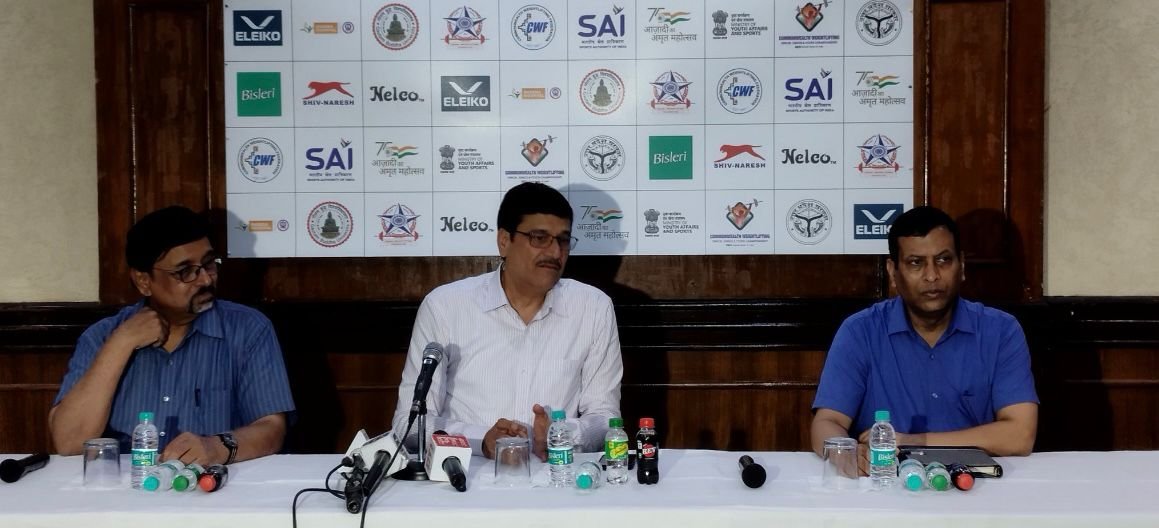
Indian Weightlifting Federation bans 10 coaches after their wards accepted doping offences
https://revsportz.in/indian-weightlifting-federation-bans-10-coaches-after-their-wards-accepted-doping-offences/ The Indian Weightlifting Federation (IWLF) has suspended 10 coaches for three years after their trainees tested positive for banned substances in the IWLF National Championships for Youth, Juniors and Seniors held in the Tamil Nadu city of Nagercoil from December 27, 2022, to January 7, 2023. In taking this step, IWLF has taken cognisance of the rising incidence of doping and turned the clock by seven years to the time when it last imposed such sanctions on coaches, holding them accountable for the doping offences of their wards. It remains the only National Sports Federation that makes the coaches responsible to clean the sport. “We want to fight the doping menace as aggressively as possible. That is the reason why we have persuaded NADA to conduct a number of tests in the IWLF National Championships,” IWLF President Sahdev Yadav said. “We are aware that the number of weightlifters sanctioned for doping violations is extremely high and we want to curb it the best we can.” As per the latest list available on the NADA website, 18 weightlifters have been placed on provisional suspension, 35 weightlifters are serving a 3-year ban under the case resolution agreement with NADA and 19 others are currently ineligible to train or compete in any sport after being sanctioned by anti-doping panels. These include seven minors. “The coaches signed undertakings at the National Championships in Nagercoil and Itanagar that they would be liable to be suspended for the same duration as their athletes, irrespective of how many of their weightlifters test positive. The IWLF Executive Committee has held the coaches accountable as per the undertaking that each of them signed,” Sahdev Yadav said. He said that IWLF had waited for the National Anti-Doping Disciplinary Panel to complete the adjudication process for Karnataka’s Akshata Kamati and for NADA to confirm that there were no more positives from the samples collected in Nagercoil. “You will notice that we do not upload results on our website until the anti-doping process is complete,” he said. “Wait for a few weeks and you will hear of more coaches being banned because their lifters tested positive in the 2023-24 National Championships in Itanagar. I know we are not winning friends in the weightlifting community in India by being strict about anti-doping matters, but I do not mind losing friends if they do not understand the importance of keeping our sport clean,” he said. Shockingly, three Services coaches — Syamlal M, Chendu Shekhar and LB Singh – and a Railways coach figure among the 10 whose trainees accepted three-year ineligibility periods under case resolution agreements with the National Anti-Doping Agency (NADA) after testing positive in the National Championships last year. Chendu Shekar was penalised as he coached a Rajasthan lifter who was training under him at the Army Sports Institute in Pune and tested positive. Praveen Kumar was suspended since he had identified himself as coach of his son who represented Haryana. Since he is employed by Railways, his suspension notice through the Railway Sports Promotion Board. The other coaches are: A. Santhosh Kumar (Karnataka), Hariram Yadav (Uttar Pradesh), Rajendra Prasad (Bihar), Amandeep Singh (Chandigarh), Joginder Gill (Haryana) and Ashok Kumar (Delhi). The last two coaches were in charge of athletes who were minors at the time of the competition in Nagercoil. The 10 athletes who tested positive include a minor each from Haryana and Delhi who were competing in the Youth division. The 17-year-old from Haryana tested positive for Dehydrochloromethyltestosterone (DHCMT) while the 18-year-old’s samples showed up a cocktail of 19-norandrosterone and Clomiphene. The three juniors who tested positive and accepted 3-year bans were Anubhav Singh (Rajasthan), who finished first in the 81kg with a total of 284kg, Haryana’s Aman who topped the 102kg class with total lifts of 306kg and Chandigarh’s Deeksha who climbed the 87kg podium with 173kg total. Needless to say, they were stripped off their gold medals. Similarly, L Sadananada Singh (Services) had the men’s 73kg class silver medal taken away after he tested positive for GW1516 and its metabolites sulfone andsulfoxide while and Uttar Pradesh’s Pradeeep Kumar Yadav lost his men 109kg division bronze medal after testing positive for GW1516. The other men who failed dope tests were Bihar’s Gulshan Kumar (sixth in men’s 67kg sixth) and Uttar Pradesh’s Abhay Yadav (fourth in men’s 89kg). Karnataka’s Akshata Kamati who topped the women’s 87kg class with a total of 206kg preferred to opt for a hearing after she tested positive for Stanozolol and DHCMT but her attempt to prove innocence failed. Meanwhile, the IWLF also suspended Paramjit Sharma for four years on disciplinary grounds. As an athlete, Paramjit Sharma was a 1990 Commonwealth Games gold medallist, a two-time winner of the Best Lifter award in the National Championships and was conferred the Arjuna Award in 1997.

CSK reel under GT’s Gill, Sai tonathon!
https://www.mid-day.com/sports/cricket/article/csk-reel-under-gts-gill-sai-tonathon-23348561 By the time of going to press, Chennai had lost three wickets for 57 runs in the seventh over while chasing the imposing Titans’s score of 231-3. A depleted Chennai Super Kings bowling attack was taken to the cleaners by the Gujarat Titans openers on a featherbed clay pitch at the Narendra Modi Stadium on a sultry Friday evening. By the time of going to press, Chennai had lost three wickets for 57 runs in the seventh over while chasing the imposing Titans’s score of 231-3. The new opening pairing of Sai Sudharsan (103, 51 balls, 5×4, 7×6, 201.96 strike rate) and Shubman Gill (104, 55 balls, 9×4, 6×6, 189.9 strike rate) was fruitful for the home team which were sent in to bat after Ruturaj Gaikwad won the toss. Sudharsan used the slog sweep to pronounced effect for his seven hits over the ropes. He even swept seamer Simarjeet Singh over long leg for his first Indian Premier League hundred. Chennai badly missed their three main seamers—Deepak Chahar, Matheesha Pathirana and Mustafizur Rahman on a wicket that offered no help to bowlers. However, Tushar Deshmukh (4-0-33-2) and Shardul Thakur (4-0-25-0) were somewhat economical, otherwise, the other four bowlers conceded more than 13 runs an over. A niggle to wicketkeeper Wriddhiman Saha was like a blessing in disguise for the Titans as their new opening combination of Gill and Sudharsan took off the block with 14 runs in the first over and never looked back, scoring on an average 10 or more runs an over. Brief scores GT 231-3 in 20 overs (S Gill 104, S Sudharsan 103; T Deshpande 2-33) v CSK (scores incomplete)
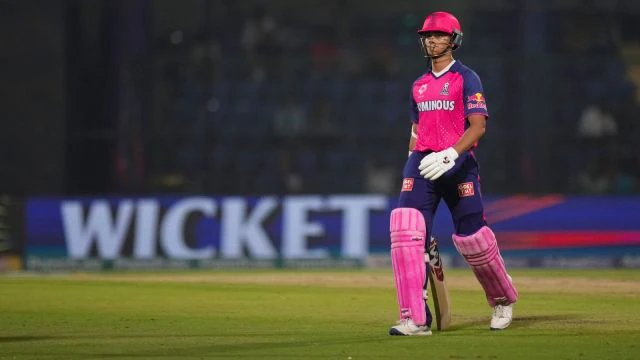
Will Yashasvi Jaiswal be able to handle Pakistan’s Shaheen Afridi and Mohammad Amir? The signs aren’t good
In the 11 innings in this year’s IPL, Rajasthan Royals opener Yashasvi Jaiswal has been dismissed by the left-arm quicks five times out of which three were attempted to pull shots. https://indianexpress.com/article/sports/cricket/yashasvi-jaiswal-weakness-left-arm-seamers-india-t20-world-cup-2024-9318879 Even before Axar Patel pouched the top-edged pull from Yashasvi Jaiswal at mid-off, the bowler Khaleel Ahmed pointed his finger at his Delhi Capitals captain Rishabh Pant. It seemed as if it was a plan that had come off. Two features stood out: a left-arm seamer and miscued pull off a short rising ball. Though the left-handed opener has mustered 320 runs with an impressive strike rate of 157.64 this IPL, it is Yashasvi Jaiswal’s struggle against the left-arm seamers and the miscued attempts to pull back-of-the-length deliveries that would worry the Indian team, heading into the T20 world cup. Yashasvi Jaiswal, 22, has been hot and cold in this season for the Royals. Sample this: in 11 IPL knocks this year, the Rajasthan Royals opener has been dismissed by the left-arm quicks five times out of which three were attempted pull shots. In the Royals tournament opener against Lucknow Super Giants, it was the lefty Mohsin Khan, who tested Jaiswal with a back-of-a-length short rising ball and he ended up ballooning it straight to Krunal Pandya at mid-on. Against Royal Challengers Bengaluru (RCB), it was Reece Topley, whose extra bounce did the trick for Jaiswal as another mistimed pull was caught by Glenn Maxwell at mid-off. Against Mumbai Indians, he became the debut IPL scalp for the 17-year-old left-handed Kwena Maphaka. The young South African bowled it full and Jaiswal tried to loft it over cover but ended up chipping it straight to Tim David at cover. T Natarajan is another left-arm quick, who has had Jaiswal’s number this season. If the short-pitch ploy had worked against Yashasvi Jaiswal, Punjab Kings’s Kagiso Rabada and Marcus Stoinis dismissed him by serving wide from back of the length. On both occasions, Jaiswal tried to charge down the ground and was caught at third man and sweeper cover, respectively. “Yashasvi Jaiswal got out to a left-arm pacer once again. He hasn’t got out to a short ball for the first time. He has been dismissed many times and got out once more. It was an almost similar shot and got caught in front of the wickets,” former India opener Aakash Chopra has said on his YouTube channel. In all those dismissals, one can see that Yashasvi Jaiswal is trying too hard to clear the ropes. The balls that climb on him, he has been going hard, unable to get into the right positions. India pacer Mohammed Shami reckons Jaiswal is rushing to play shots and that is affecting his ‘shape’. “He looked out of shape while playing the shot (pull),” Shami said about Jaiswal on his YouTube channel. Shami also talked about how Jaiswal is rushing a touch, too eager to hit hard. “He seemed to be in a rush,” Shami said while analysing the Delhi Capitals vs Rajasthan Royals match. “He got out to a shot which was not required. It was not needed. He is in good touch and has even scored a century.” The old flaws are back Earlier this year after the conclusion of the five-match Test series against England, Zubin Bharucha, Rajasthan Royals’ high-performance director, pointed out a couple of flaws in Yashasvi Jaiswal’s batting that he spotted after the youngster’s first season for the Royals. The first problem was Yashasvi Jaiswal’s inability to play shots on the on-side. And so far now, in this season, the Jaiswal is again struggling to score runs at on-side. Even during his unbeaten 104 against Mumbai Indians, 62 per cent of runs were scored on the off-side. The other technical aspects took a lot longer to improve and as per Bharucha, it took eighteen months to be precise getting him to bend his elbow at the point of impact. Because of that, he couldn’t generate enough power. “Yash was bending his elbow at the point of impact. When you bend your elbow at the point of impact, you do not generate power. To solve that problem, it took us 18 months. We have ensured that the elbow is not bent at the point of impact and by using different bats and balls,” Bharucha had told this newspaper. Jaiswal had overcome these technical issues with his grind at Talegaon, the training base of Rajasthan Royals. However, now with the T20 World Cup starting, a week after the IPL final, the youngster won’t have much time to figure out his shortcomings. And with Rajasthan Royals set to play the playoffs, Jaiswal would also be among those who will reach the US a bit later than the likes of Rohit Sharma, Virat Kohli, Hardik Pandya, Jasprit Bumrah and Suryakumar Yadav. Jaiswal’s struggle against the left-arm seamers will undoubtedly make the opponents field at least two left-arm quicks against India. Not just Jaiswal, the left-arm seamers will target Rohit Sharma and Virat Kohli. There is a high chance that on June 9, Pakistan will start with Shaheen Shah Afridi and Mohammad Amir in New York, against India’s top three.

Random Forays: The calmness route to decision making
https://www.hindustantimes.com/cities/chandigarh-news/random-forays-the-calmness-route-to-decision-making-101714849551557.html Elections are around the corner and all voters must not only exercise their right to vote but must also decide their choice of candidates with calm, cool, sensible mindsets. We cannot afford to choose a career or a matrimonial liaison without a high degree of discernment. We can also not afford to decide which way our vote will go without distancing ourselves from the diatribe and vitriol that have vitiated the air. Life is unpredictable and nobody’s perfect. Once we learn to accept these inexorable dictums of life, we make peace with our own selves. Yet our own innate imperfections prevent us from such acceptance. We expect others to act in a particular manner and we form an assessment of life’s probabilities according to our own mind-eyes. Our decision making suffers on account of a spectrum of emotions, rufflements and perceptions. While decisions like the choice of ice cream or even the attire to don on a particular day might not have earth-shaking implications, the tone we use to speak to others might influence relationships. Elections are around the corner and all voters must not only exercise their right to vote but must also decide their choice of candidates with calm, cool, sensible mindsets. We cannot afford to choose a career or a matrimonial liaison without a high degree of discernment. We can also not afford to decide which way our vote will go without distancing ourselves from the diatribe and vitriol that have vitiated the air. Being sensible is not an easy trait to possess in a slam bang era. T20 batters appear like kamikaze warriors these days. Anything but calm and collected. Yet, one realises that behind their madness is obviously a method, especially when one watches Surya Kumar Yadav or Rishabh Pant batting. Fearlessness need not mean recklessness, in any life domain! Decision-making in personal relationships is of paramount importance. Every word we utter, every expression that appears on our visages, every truth, untruth or concealment has repercussions that dent or fortify even lifelong bonds. There is a flippant saying in Hindi that roughly translates to, “The wounds caused by harsh words are extremely deep and thus we should sort out small arguments through fisticuffs!” The point is that a calm mind will make a decision that is likely to soothe and placate even an aggravated other. A provoked or rattled human being will do or say things that can only worsen matters, perhaps beyond repair. There’s no point in trying to convince a loved one about a significant life decision, like the choice of an educational stream or a change of career, if you or the loved one or both are highly emotional at that moment! Calmness is a habit but it is also a goal. The ability to overlook certain potential flashpoints or aberrations in one’s landscape is a higher quality at times. Ignorance is bliss in more ways than one! Calmness is enabled through right meditation, right activity and right health habits. Calmness is also the result of a determined mindset which refuses to give in to even a bombardment of provocation. Parents and children who discuss future plans and the decisions surrounding them also need to confabulate in calm circumstances. Very often we tend to impose not only our viewpoints but also our creeds upon our progeny, and that too in a forceful manner. The kids too tend to follow suit and a slam-door scenario often occurs when much cooler feelings would be in order. Life is not to be lived in a huff! An attitude of patient understanding and receptivity is a leadership trait that is sorely missing nowadays. However, incorrect decisions are a part of life’s learnings. We must bear the consequences, but we must pick ourselves up and move on. Decisions which worsen relations between nations, communities and groups of people are even more important and have to be well thought over before being let loose. I guess it all boils down to the leadership that the world is saddled with at any given juncture of history. An individual might feel momentarily terrible at selecting the wrong ice cream. But the whole world suffers when it selects pernicious leaders to rule it!

Random Forays: The unpredictable meanderings of life
https://www.hindustantimes.com/cities/chandigarh-news/random-forays-the-unpredictable-meanderings-of-life-101713641547529.html Life and its twists have the potential to boggle the mind of the observant human watcher. Who sits next to you on the train and who do you encounter at a ticket counter? Who decides which queue moves faster and which cab you get into? Which movie director could plan for one’s sudden urge to eat gol-gappas which necessitates an encounter with the expert craftsman who prepares and sells them. The meanderings of life are quite astonishing and entertaining if one views them that way. Who sits next to you on the train and who do you encounter at a ticket counter? Who decides which queue moves faster and which cab you get into? Which movie director could plan for one’s sudden urge to eat gol-gappas which necessitates an encounter with the expert craftsman who prepares and sells them. It could well have been the gentleman at the next seat who was your neighbour on the train, the clerk at the next ticket window, another taxi driver altogether or a gol-gappa man with a stall situated a furlong away from the one whose wares you actually savoured. Life and its twists have the potential to boggle the mind of the observant human watcher. A conversation on a bus or a plane might just turn into a life-long friendship or even a marital liaison. The handsome lad ensconced at the opposite seat might catch the fancy of a lissome young lady and vice-versa, but neither of them are likely to speak to each other unless they are on adjacent seats. Even if they are seated in proximity, they might hesitate to initiate a conversation and might forever keep ruing their hesitation in having taken the plunge. I often wonder at the probability of bumping into someone we know in a crowded marketplace or at an airport. Who exactly decides the exact timing of arrival at a motivational speaker’s session with first come, first served seating arrangements. One might be seated next to person X or Y or Z. One’s conversation with that person might depend on whether the motivational speaker is fantastic or pathetic. It might also depend on the weather, the time of the day or the political climate. All thoughts or words that come to us or emanate from us are dynamic, usually free flowing and unstructured in nature, unless one has an agenda. The sheer serendipity of having come across a classmate from yore or even a former boss, at a largish social gathering leaves one wondering if one thinks that way. Why did that chance meeting not happen the previous month or the next year? What are the cosmic forces that control the uncontrollable maze of human experiences? A school chum was standing at a kerb in a far-off land years ago and I happened to be alighting from the same cab! We met after years but not in the city where we both still live. Instead we met thousands of miles away in a distant land. Often in the movies they show two friends who crossed each other in close proximity, in a public place, but did not actually meet. This must be a frequent occurrence in our lives. Years may pass before the two of them meet again. Those who travel or socialise more and also those who are in the public space, are of course likely to attract some of their tribe quite frequently. If our vibe attracts our tribe and the law of attraction is to be relied upon, then the chances of bumping into those whose thoughts align with ours are more. Our institute faculties too potentially decide our life’s curves. Intuition is a faculty less developed in most people but some can actually refine it to understand life’s nuances a little better. The unpredictable charm of life also manifests in our choosing one restaurant over another, one menu option over another and one table over another. It might even play out in major life happenings like the choice of a life partner or a career. The cosmic director is the one who probably knows what he is doing even if we are usually befuddled by the unendingly intricate complexities of life. Why was one born in a particular family which lives in a city by the coast or far away? Why is one a good writer but not a good singer? The scriptures will mention karmic theories and they are probably right. But what we can choose to do is to accept our roles and try to play them well. In other words, we can ride the tide and go with the flow!
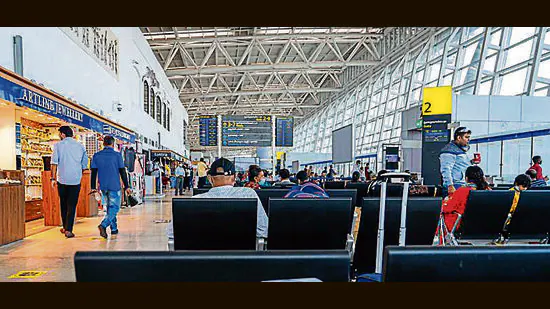
Random Forays | Encounters at Gate Number 34
https://www.hindustantimes.com/cities/chandigarh-news/random-forays-encounters-at-gate-number-34-101712456005046.html Some will be habitually restless while waiting. Even if they have been told that the boarding gate wouldn’t open for another hour, they will perch themselves upon the edge of their seats and keep gaping at the airline personnel on duty. Any slight movement in urgency that the staff makes will impel the restless traveller to scurry towards them and enquire whether boarding would soon begin. Airport waiting areas are forever buzzing with a motley mix of the banal, the bizarre and the brilliant. Any frequent flyer knows that he is likely to encounter a microcosm of the vast expanse of humanity at an airport gate. Individuals who could be from any race, any background, any mindset would probably rub shoulders with each other at such focal points. Flying is definitely a much more mundane activity in this jet setting era, but the entertainment that an observant flyer will perceive could potentially be limitless. Take the example of Gate number 34 at Terminal 2 of the Delhi Airport. Flights to Chandigarh can typically be accessed through this gate but they are at times delayed. Thus, one finds ample opportunity to observe, dissect, admire or mentally criticise the conduct and appearance of several others. Though one has thankfully reduced the tendency to be overly critical of others, one’s thoughts remain akin to those of humankind as of now! Some will be habitually restless while waiting. Even if they have been told that the boarding gate wouldn’t open for another hour, they will perch themselves upon the edge of their seats and keep gaping at the airline personnel on duty. Any slight movement in urgency that the staff makes will impel the restless traveller to scurry towards them and enquire whether boarding would soon begin. On being told that there is still time they will return to their perch but will be literally ready for take-off any moment! Then there are the snoozers: those who seem to not have slept for a week, even if they have been on vacation. They will doze off without a care in the world on one of the reclining seats or even on a normal one but will risk being jolted out of their slumber by the aforementioned restless co-traveller, well before time. Somewhere in the middle of these two extremes will be the conversationalists. These worthies will confabulate unendingly on issues as diverse as cricket, cinema, crime, politics, work pressure and the general state of the world. They will not bother much about who is listening intently and who is being disturbed by their constant banter. An intellectual traveller will usually submerge his consciousness deep into a book, thankfully still of the paperback sort, although the lesser act of reading books on kindles and smartphones is also prevalent. He will raise an eyebrow occasionally when there is some hustle or bustle in the vicinity but will generally emanate an air of calmness. Foreign tourists on a visit to our mindboggling land would perhaps have a thick-looking India travel guide in hand. They would appear to be suitably befuddled by the sheer expanse of India’s canvas, not realising that even we Indians have understood little of it! Families on vacation are boisterous travellers and the whole jing-bang will create quite a ruckus. This might entail scoldings from moms that their progeny will receive, frequent visits to the restrooms that kids will require, a spilled helping of ice cream with smears and smatter on the airport floor, collective laughter at family-type jokes, and some general fuss over the elders accompanying the clan. Single travellers with small bags and some calls to make will steer clear of such groups and will find some calmness away from waiting areas. They will also catch up on their exercise deficiency for the day by covering appreciable expanses of the airport floor and catching up on their personal targets of 10,000 steps a day! The tone, tenor and content of conversations at Gate Number 34 might also vary with the time of day. And when inordinately long January delays occur, nostrils might flare, and the overall degree of restlessness might take on an exponential route. Be that as it may, the best recourse for a hardened traveller is to find amusement, though privately, in the general scenario that fellow human beings present before him. Not a single show on Netflix could hope to compare! So, the next time you happen to arrive at an airport terminal, uncharacteristically, well in advance, you might contemplate essaying a write-up akin to this one!
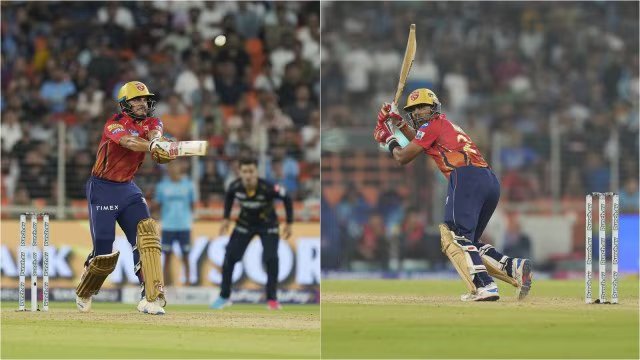
Shashank Singh & Ashutosh Sharma — Tale of two gutsy cricketers from cricketing backwaters
https://indianexpress.com/article/sports/ipl/shashank-singh-ashutosh-sharma-tale-of-two-gutsy-cricketers-9253828/ Shashank is a journeyman, who got his IPL contract due to a goof-up, while Ashutosh, who was discarded by Madhya Pradesh, got his second home at Railways, and broke Yuvraj Singh’s record to catch scouts’ attention. Shashank Singh hails from Bhilai, famously known for the steel plant. Ashutosh Sharma is from Ratlam, which is best known for the dialogue “Ratlam ki galiyaan,” in the Kareena Kapoor and Shahid Kapoor – starrer Jab We Met. Neither Bhilai nor Ratlam is famous for being a cricketing hub. On Thursday night, the two little-known uncapped players led Punjab Kings to a three-wicket win over Gujarat Titans at the Narendra Modi Stadium. Singh clubbed four sixes and six boundaries in his unbeaten 61 off 29 balls, while Ashutosh scored a quickfire 17-ball 31. Mohammed Kaif, who has seen Shashank from close quarters during his two-year stint with Chattisgarh sums up the “fearless” approach of the two batters. “Players like Shashank wait for the opportunity and they know that if they fail no one is going to talk about them. No one will be bothering why they failed. Every chance is the last chance for them. Such players come from small cities and have big hunger,” Kaif tells The Indian Express. “I met him this season during the RCB game and he got out on 0 batting down the order. He said bhai aage karoonga, pakka karoonga (I will do better in the future) and he has been not out since then. It’s not an easy position to bat, especially for uncapped players batting at number 7. Mostly each team has a foreigner who plays at that position someone like Andre Russell. The lower-order batsman will have to score against quality attacks and face bowlers like Bumrah in the end. So to perform there is a big thing,” adds Kaif. On the same lines, Amey Khurasia, who scouted Sharma, when he was 12, says the the small cameo means a lot for Ashutosh and players like him, who have fought the system to reach this level. “One should offer a prayer for such players. Ashutosh would have been lost if not for the Punjab Kings. He has lost 3-4 years of his cricket because of the dirty politics,” says Khurasia. “We always hear stories that one should prioritise first-class cricket. But then there are many like Ashutosh, who disappear because of the system. Imagine, if not for Punjab Kings and the IPL, would we have heard the name of Ashutosh? He would have played for Railways all his life. “When he went into bat, it was the first time he was batting in an international arena, in that big stadium, where the team is under immense pressure. He was just waiting for one chance and he got it and almost took his team home. How many first-class cricketers can do that in the IPL, very few,” he says. Shashank, a mistaken identity Shashank was 13 when his father was posted in Jabalpur when he started making inroads in the U-15 and U-17 cricket. In his U-19 to U-25 and early List-A T20 years, Shashank was part of the Mumbai setup alongwith the likes of Abhishek Nayar, Shivam Dube, Suryakumar Yadav and Shubham Ranjane. A fierce competition in the ranks for the starting XI afforded him little game time. It was when his fellow teammate Abhishek Nayar moved to Pondicherry that he convinced Shashank to move with him. During his one-year cooling-off period though, Shashank was approached by Chattisgarh Cricket to join them. His IPL story has been no different. Having been signed by the Delhi Capitals and Rajasthan Royals in his first two years in the league, Shashank didn’t get to play in a single game. It was at Sunrisers Hyderabad where he first caught the eyes in the 2022 season where he made 10 appearances, one of which saw him maul three sixes in a row to New Zealand speedster Lockie Ferguson. But even that wasn’t enough as Shashank was let go by the 2016 winners. His move to Punjab wasn’t a smooth transition either with the drama during the 2024 auction leaving many under the impression that Punjab Kings didn’t want him, having mistaken him for another. “What he brings to the table is that he has played junior cricket from Mumbai. His parents being from Chattisgarh, he’s got a right to play here, which he used. He made his return here in 2019 and has been playing for us since,” says Hitesh Goswami, Chattisgarh coach, who is also Punjab Kings scout. “There are some players who feed off the trust you show in them and Shashank is one of them. I picked it very early in him, he was the one who will win you the games. ‘You are my number 1 player.’ If you show the trust in him, he’ll deliver. Punjab did the same with him. I’m also a talent scout for them. I was pushing for Shashank. I used to tell them, Sunil Joshi and Sanjay Bangar, ‘Trust me, I’m only a scout, but he’s a good player.’ I pushed Punjab Kings to pick him, whatever happens. “But even after he was selected, it looked like there was no chance that he’d be in the starting team. But the franchise took my word for it. The first time it has happened that a player from Chattisgarh has played four out of four IPL games in a season.” From June this year, Chattisgarh Premier League is coming up and Goswami says it won’t be as big as TNPL or KPL but it will create a big pool of cricketers for Chattisgarh. “Look I can’t pretend that now we have CPL, we will be giving players to the IPL. No, we are not,” he says. “What will happen is: 120 players, 6 teams, which means 80-90 players will play in the tournament. They will get a very good stage to move forward. They will be in the limelight, people
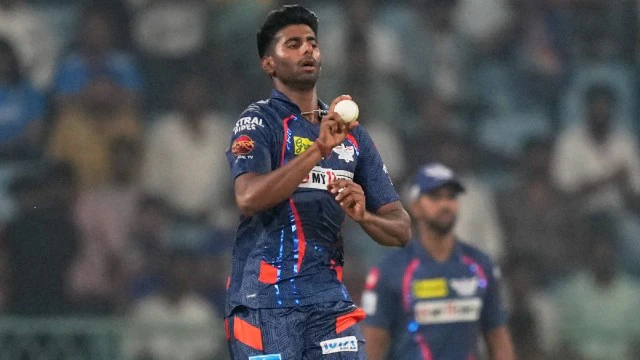
Mayank Yadav: From hearing tales of Curtly Ambrose from his father to idolising Dale Steyn, and being known as ‘helmet pe maarne waale bowler’ in Delhi circuit
https://indianexpress.com/article/sports/cricket/mayank-yadav-the-150kph-plus-bowler-hearing-tales-curtly-ambrose-dale-steyn-delhi-circuit-9242954/ Spotted by the late Tarak Sinha at the age of 13, Mayank Yadav on Saturday night in Lucknow had the entire Ekanna Stadium on its feet with his pace. Jonny Bairstow, a wrecker of pace bowling all around the world, was in for a shock on Saturday night when he shaped to pull a back-of-length delivery from the debutant Mayank Yadav as it rushed at him in a blur. It resulted in a dolly of a catch and the subsequent wickets with bouncers in a sensational spell of 3/27, that included one at 155.8 kmph, against Punjab Kings warmed the hearts of Mayank’s father Prabhu Yadav. It took him back to a pivotal moment when Mayank was 14 and when he, a fan of the West Indian pace legend Curtly Ambrose, planted a seed in his son. Yadav sr. was returning from his factory, where they make sirens for ambulances and police vehicles, when he stopped at Sonnet Club at the Venkateshwara college in Delhi to watch Mayank bowl. On their way back home, the father would drop a nugget that would years later have repercussions in an IPL game at Lucknow’s Akana ground. “I shared with him a story of Ambrose. Tujhe pata hai usse log darte kyu tey? kyunki wo sar pe daalta tha, tujhe darana hai batsmen ko toh wahi karna hoga (You know why he was feared because he used to hit them on their heads. If you want to put that fear in their minds you must start doing the same),” Prabhu rewinds to that little big moment to The Indian Express. Over his teenage years, Mayank became the most fearsome pacer in Delhi and is named as “sar pe maarne wala bowler( Who hits on the head).” On Saturday, even as he was harassing the batsmen, the former pacer Brett Lee would tweet: “India has found its fastest bowler. Raw pace. Very impressive.” “General life mey bhi mujhe speed pasand hai (I am fascinated with speed in life in general). I love rockets, jets and superbikes. Speed gives me a thrill,” Mayank would say at the end of the game. The speedster who had clocked 153kmph in the Syed Mushtaq Ali Trophy was on the selectors’s radar for the recent Test series against England as Mayank was supposed to get fit by the end of January from his side strain. A disappointed Mayank had shared his thoughts with this newspaper then, saying “Mai ek pair pe khel jata agar mai 60 per cent bhi ready hota (I would have played on one leg if my body would have been 60 per cent fit).” Mayank’s love for fast bowling had started as a taunt by his father at their home in West Delhi’s Motinagar, a few kilometres from where Virat Kohli grew up. And it involved two great fast bowlers: Ambrose and Dale Steyn. While Yadav sr was a fan of the Antiguan, the son liked the South African Steyn. “Muhje Ambrose aur Walsh kaafi pasand they (I used to love Ambrose and Walsh),” the father Prabhu Yadav tells The Indian Express. “Ambrose more because of his pace and the way he used to bounce the batsmen. I used to keep telling him their stories.” Mayank was a big fan of Dale Steyn and as someone who hated spending time at home watching cricket, he would only see if the South African was playing. “Was your Ambrose used to be as good as Steyn? He used to ask this and we developed a small rivalry on who is better, Ambrose or Steyn,” Prabhu Yadav recalls. Spotted by Rishabh Pant’s coach Tarak Sinha Raw pace and accuracy have been standout aspects of Yadav’s bowling on his IPL debut and even Shikhar Dhawan, who gave him his List A debut for Delhi, found it difficult to negotiate him. Mayank’s rise in the game has been quick, as he has never played U-14 and U-16 cricket for Delhi but the late Tarak Sinha, who was also the coach of Rishabh Pant, kept pushing the boy. “Ustaad ji (Tarak Singha) kisi ko ek nazar dekh lete tey bas who kaafi tha. jo Rishabh ke saath hua wahi Mayank ke saath hua (Tarak sir has this knack of spotting talent with just a quick glance; be it Rishabh or Mayank),” says Devender Sharma, who now runs the Sonnet Club. Devender recalled how ahead of his U-19 trials for Delhi in 2020, Tarak Sinha was upset with Mayank as he had declined the offer from Services to play him in their team. “He was not able to make it into the Delhi side and Services was giving him a job and a promise that he would get to play all the three formats, but Mayank didn’t take the offer,” says Devender. But Mayank would promise the celebrated coach that he would make it from Delhi. Unfortunately, Sinha died in the second wave of Covid in November 2021, and a month later Mayank made his Delhi debut in the Vijay Hazare Trophy at Sector 16 Stadium in Chandigarh. With 12 needed off the last two overs, Yadav bowled a maiden in the 49th over to seal the game. “I ran away after the Services guys told me that I was selected. I was not even giving my 50 per cent but three or four bouncers I bowled, they were impressed. But I wanted to play for Delhi. Sir mai Delhi ka ladka hun aur yahi se khelna tha (I am a Delhi boy and I wanted to play for Delhi). Tarak sir was really angry,” recalled Mayank. Mayank’s father Prabhu Yadav gets emotional while talking about the role Tarak Sinha has played in his son’s career. “Bhagwan hai Tarak sir (He is a god). One year, my business was not doing well. In the summer vacation, Sonnet used to organise a camp and the fee was Rs 65,000. I had requested Devender ji that I would pay it later and he had informed Ustaad ji
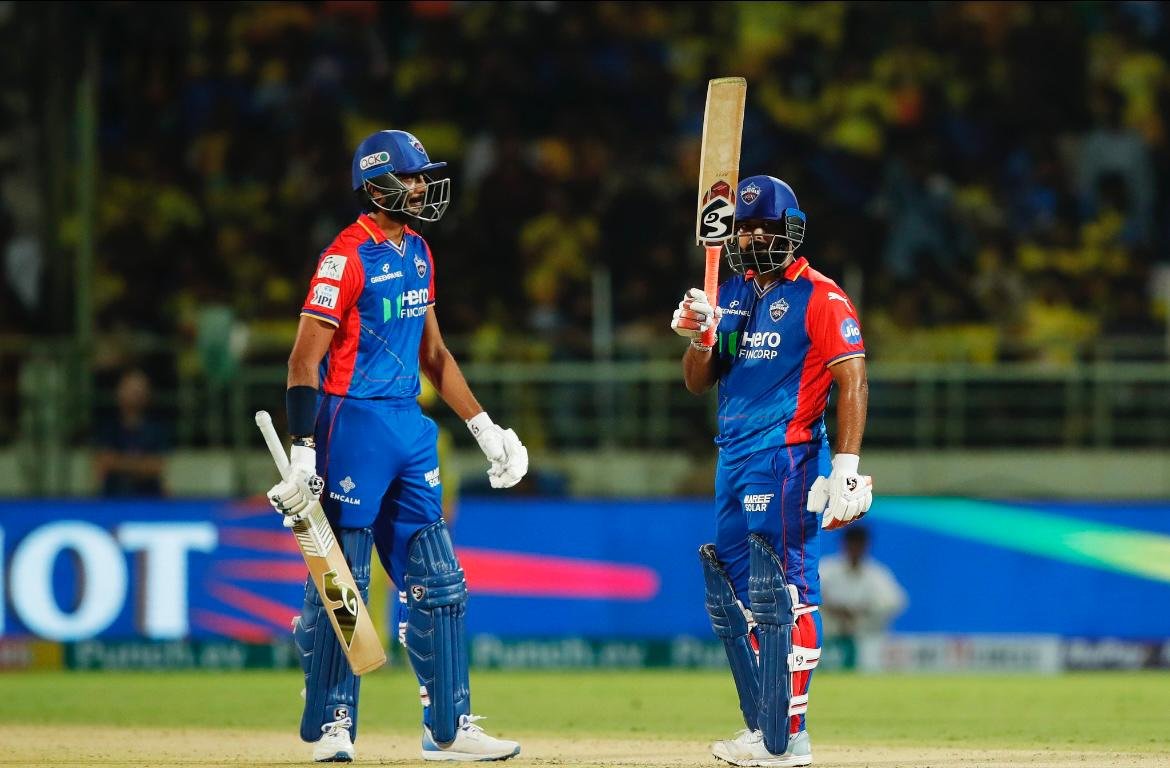
Rishabh Pant deals with unfair pressure on return journey with calm and inimitable style
https://revsportz.in/rishabh-pant-deals-with-unfair-pressure-on-return-journey-with-calm-and-inimitable-style/ It is unfair that he is being assessed against the backdrop of the ICC World Twenty20, but Delhi Capitals skipper Rishabh Pant’s countenance at the batting crease against Chennai Super Kings (CSK) in the Tata Indian Premier League match in Visakhapatnam on Sunday night did not give any impression other than of being anchored in the present. Though there were some patented strokes as Pant compiled a maiden half-century since his return from a career-threatening injury, even he would concede that the timing is not quite back yet. It is a measure of his mental strength that he went past the half-century mark in an innings played out in two parts, scratchy at first and breezy towards the end. Yet, the calm with which he waited for the death overs offered him the opportunity to rapidly move from 23 off 23 to 51 off 32. There was not even a whiff of frustration as Pant rotated the strike. Instead, all we got to see was his intent of spending more time in the middle and staying till the end in the hope that he could launch a few boundary hits. It seemed bad when he could not time the ball even as Mitchell Marsh found the boundary with some comfort. And it got worse when Matheesha Pathirana landed a double-strike in the 15th over to see the backs of Marsh and Tristan Stubbs. The onus was well and truly on Pant to fire Delhi to a defendable score. And he did not let the side down. With less than five overs left for the Delhi innings to draw to a close, he warmed up with a slash off a wide full toss from Tushar Deshpande to the cover fence. A pull to square leg for four and a pick-up shot for six over long leg off Mustafizur Rahman got his backers excited. But it was his joust with the slingy, Sri Lankan seamer in the 19th over that made him produce his best. He spotted an attempted yorkerearly, and with deft footworkin getting the front foot out of the way, he sent the ball soaring over wide long-on for a six. It was a shot that left Pathirana wide-eyed in wonder. The next delivery was hit to the straight field for four and a square drive for four followed as Pant reached his half-century in 31 balls, faster than opener David Warner. His dismissal to a catch at long-off, skying the ball when attempting another big hit off Pathirana was symptomatic of the batter who was searching for that amazing quality called timing. It has been but three games since he returned to the batting crease, having spent a year in rehabilitation after that horrific car crash. However, if nothing else, he bought himself more time and forced the naysayers to step back. Make no mistake, as he offered enough and more clues that his cricketing intelligence is intact, he did enough on Sunday night to ensure that the conversations featuring him would only be positive. After all, he returned to the pitch six months sooner than his surgeon believed he could. Of course, talent does not go away nor do skills diminish but it will take longer than three games for Pant to rediscover the magical timing that makes his batting so special. On Sunday, by parking his mind in the present and not letting it engage with the chatter outside, the 26-year-old was showcasing his eagerness to move away from the time when rehab was his only game